
90% of consumers expect a similar experience with a brand across marketing channels. To learn how to maintain brand consistency on social media, keep your core visuals, voice, and values recognizable while adapting each post to its platform and audience.
That balance can be tricky: a post that works on one platform may need a different format or tone elsewhere. Adapting how you present it doesn’t mean changing what your brand stands for.
This guide explains why consistency matters and how to build it into your social media workflow. You’ll learn how to organize brand guidelines, create flexible visual and voice rules, tailor content to different audiences, and review posts so your presence feels cohesive without becoming repetitive.
Key Takeaways
- Build a practical brand guide that gives everyone clear direction on logos, colors, typography, imagery, and voice.
- Keep core visual elements recognizable across platforms, while adapting layouts to fit each channel.
- Tailor content to platform audiences and formats without changing the values behind your message.
- Let your brand voice stay consistent while adjusting tone to suit announcements, replies, and customer feedback.
- Review posts and interactions regularly to spot inconsistencies and keep your social presence aligned as audiences and platforms evolve.
1. What is social media branding?
Social media branding is how a business presents its identity across platforms and interactions. It keeps the company’s values, visuals, and messaging recognizable at every touchpoint. A customer, for example, should recognize the same business in an Instagram post, a LinkedIn update, and a reply to a complaint. Brand consistency means these experiences support one another, even when the format changes.
Brand guidelines turn strategy into clear instructions for marketing work. Document logo versions, colors, typography, imagery, voice, and tone, and include examples of how each should appear in social content. For example, specify that the logo must remain legible against its background and that photography should follow a consistent style. Clear rules help staff create assets without guesswork.
Make the brand kit easy to access. Store approved logo files, templates, profile images, and platform-ready assets in a shared location, organized by campaign or channel. Label current versions clearly to prevent staff from using an outdated logo. Add usage guidance beside each asset, such as when to use a horizontal logo or which colors work for text. Easy access makes correct use part of the workflow.
Set social media goals before planning content. Decide whether each channel supports awareness, engagement, lead generation, or customer support, then connect content choices to those goals. A support-focused account, for example, may prioritize clear answers, while an awareness campaign uses recognizable visuals and messages. Defined goals help teams decide what belongs in the calendar and keep posts aligned with the wider marketing strategy.
Communication guidelines should cover replies, complaints, escalation, and moderation. Define the brand’s response style, what information staff can share, and when an issue needs escalation. For example, a warm, direct voice can remain consistent in a public reply, while sensitive account details move to a private conversation. Include sample responses to common questions and complaints, and explain how staff should adapt them rather than copy them blindly.
Review social media brand guidelines regularly, such as monthly or quarterly, and update them when the brand, audience, or platform needs change. Audits can catch off-brand colors, outdated assets, and inconsistent messages. Social channels also need monitoring multiple times a day so teams can spot replies or complaints that require a timely response.
A practical answer to how to maintain brand consistency on social media starts with one shared source of truth. Assign someone to maintain the guide, show staff where approved assets live, and explain how each rule applies to real posts. This process supports brand recognition without requiring every platform to publish identical content.
2. Consistent visual identity across social platforms
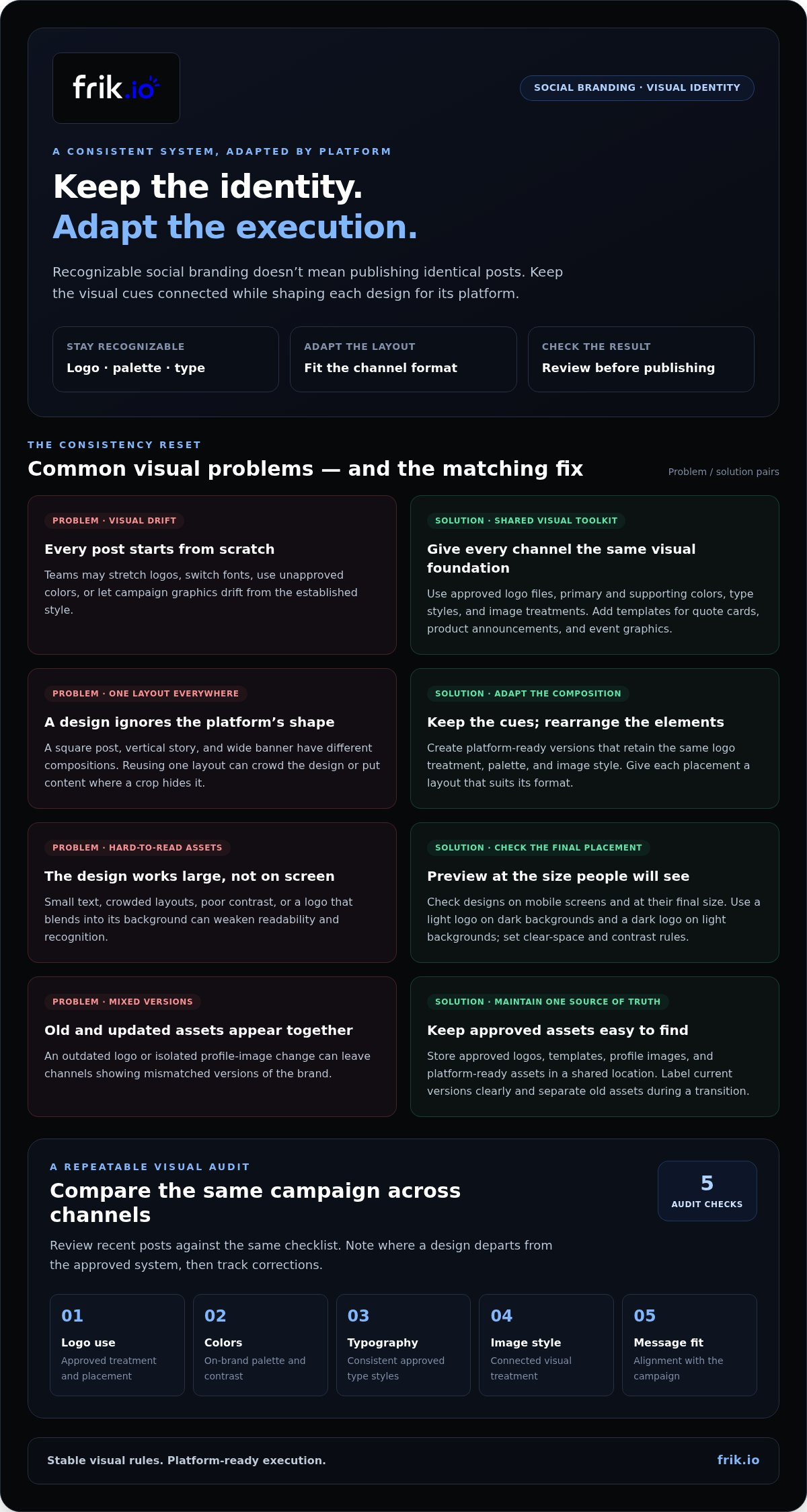
Visual identity makes a business recognizable before someone reads its caption. Keep the logo, color palette, typography, and graphic style connected across platforms. A LinkedIn graphic and an Instagram story can use different layouts while sharing the same colors and typefaces. These visual cues help audiences identify the brand. Consistency doesn’t require identical posts; it requires a recognizable system that adapts to each format.
Build a visual toolkit from the wider brand identity. Select approved logo files, primary and supporting colors, type styles, and image treatments. Create templates for common formats, such as quote cards, product announcements, and event graphics. Set rules for logo placement, clear space, and contrast. For example, use a light logo on dark backgrounds and a dark logo on light backgrounds. Practical choices like these reduce design drift between teams and channels.
Adapt the toolkit to platform constraints without changing its core. A square Instagram post, a vertical story, and a wide LinkedIn banner need different compositions. Keep the same logo treatment, palette, and image style, but rearrange elements to suit each placement. Check designs on mobile screens, where small text or crowded layouts can be hard to read. Platform-specific templates preserve identity while giving each post room to work.
Resist unnecessary visual changes. Nike’s Swoosh has remained virtually unchanged since its creation in the 1970s, demonstrating how a stable mark can support recognition over time. A refresh can still make sense when the business strategy or audience changes. Make deliberate updates across platforms instead of changing one profile image or template in isolation. Keep old and new assets clearly separated during a transition to prevent mixed versions from appearing together.
Measure visual consistency with a repeatable audit. Compare recent posts across platforms against a checklist covering logo use, colors, typography, image style, and message alignment. Review the same campaign on each channel and note where a design departs from the approved system. Regular audits can catch outdated logos and off-brand colors. Track corrections to see whether visual execution is becoming more consistent.
Common mistakes include stretching logos, using unapproved colors, switching fonts, and placing text where platform crops hide it. Inconsistent profile images and outdated campaign graphics can also weaken recognition. Check each asset at its final size and review platform previews before publishing. Avoid changing established visual elements without a clear strategic reason.
To learn how to maintain brand consistency on social media, pair stable visual rules with platform-ready execution. If coordinating versions across channels becomes difficult, a central social media workspace can help teams organize and tailor posts for different platforms.
3. Platform-specific audience and content adaptation
A consistent presence doesn’t require identical posts everywhere. LinkedIn audiences may respond to professional insights, while Instagram users may engage with visual storytelling. Define each platform’s audience, purpose, and preferred formats, then adapt the opening, length, imagery, and call to action while keeping the underlying message recognizable. A product launch, for example, could become a concise LinkedIn update and a behind-the-scenes Instagram story.
Create a platform persona for each channel. Note what followers come there to learn, discuss, or share, then match content to that intent. A software company might use LinkedIn for workflow advice and Instagram for customer stories. Keep the same brand values on both. This helps content feel native to each platform without fragmenting the identity behind the message.
Use a content calendar to connect platform-specific posts to shared themes, campaigns, and events. The 80/20 rule offers one planning model: 80% of content provides value, while 20% promotes goods or services. For example, a calendar could balance practical tutorials, community stories, and product announcements. Adjust posting frequency to each platform and audience, choosing a rhythm your team can sustain rather than publishing everywhere by default.
Templates make adaptation faster without making every post look identical. Build flexible layouts for recurring formats, such as customer tips, event announcements, and short videos. Keep elements like typography and logo placement consistent while adjusting image crops and text length for each channel. A template should guide structure, not restrict content. That balance helps a campaign remain recognizable across screens and formats.
User-generated content can bring the audience’s perspective into a brand’s presence. A customer photo, testimonial, or community story gives followers a reason to participate and helps campaigns feel grounded. Set clear selection criteria, review each submission for fit, and ask the creator before sharing their work. Add a brief caption connecting the contribution to the campaign theme, then respond to comments in the established brand voice.
Check whether each adaptation serves its intended audience. Compare platform engagement and content performance with the goal for that channel, then use the results to refine upcoming posts. If tutorial videos prompt useful questions on one platform, plan more educational content there. If a visual story earns stronger responses elsewhere, adapt the concept for that audience. Keep the central theme stable, but let audience signals shape the format and emphasis.
Before scheduling, review the calendar across platforms as one campaign. Check that imagery, messaging, and timing support the same strategy while each post suits its channel. This comparison can catch duplicate captions, mismatched creative, and gaps in the campaign. A clear workflow helps teams adapt content with purpose and build recognition without forcing every audience into the same experience.
4. Brand voice, tone, and word choice
Brand voice expresses a company’s personality; tone adjusts how that personality sounds in different situations. A friendly, expert voice might use an encouraging tone in a tutorial and a measured tone in a service update. The wording changes with context, but the underlying character remains recognizable. Document these distinctions so each writer can make consistent choices across comments, captions, and announcements.
Translate the voice into practical guidance. Choose traits such as direct, warm, or analytical, then explain what each means in writing. For example, “direct” could mean leading with the useful answer and avoiding inflated claims. Add sample phrases and alternatives: replace “game-changing” with a specific benefit the post can demonstrate. A short vocabulary guide makes consistent messaging easier to apply.
Build rules for common interactions, not just promotional captions. A product announcement may highlight a clear benefit, while a complaint response should acknowledge the issue and explain the next step. Both can still sound like the same brand. Provide examples for praise, questions, criticism, and corrections, and identify phrases that feel dismissive or overly familiar. This gives staff a reliable framework without forcing every response into a script.
Keep the message aligned with the visual identity and brand values. If a graphic promises simplicity, its caption should explain the idea in plain language rather than add technical jargon. If a post discusses a setback, choose a candid tone instead of cheerful promotional wording. Reviewing the image and copy together helps catch mixed signals before publication. Each element should support the same point.
Adapt tone to the moment while keeping the voice steady. A celebratory announcement can sound energetic; a sensitive update needs calm, precise language. In both cases, preserve the brand’s usual vocabulary and avoid sudden shifts into slang or formality. Read posts aloud before publishing. This quick edit can reveal wording that doesn’t sound like the brand in a real conversation.
Consistency also depends on shared workflows. Ask writers to use the same voice guide, review sample posts together, and update examples when messaging changes. For teams handling multiple channels, a draft review can catch differences in terminology before content goes live. HubSpot’s survey found that 89% of marketers agreed consistency earns customer loyalty. A stable voice can make each interaction feel connected, supporting trust over time.
Audit real posts and replies against the guide. Select recent examples from each platform and check whether the tone suits the situation, the wording reflects the brand, and the message aligns with its values. Note recurring edits, such as replacing jargon or softening a defensive reply. Use those patterns to improve the guidance and help every contributor communicate clearly.
5. Benefits of consistent social media branding
Consistency helps people recognize a business across social channels, even when post formats differ. Repeated visual and verbal cues make each interaction feel connected to the same organization. A familiar color palette and clear, steady messaging, for example, can link a quick customer reply with a campaign post. That recognition gives audiences a more coherent picture of the business and its values.
Trust is another practical benefit. 81% of consumers say it’s important to trust the brands they buy from. Consistent communication gives people fewer conflicting signals to interpret. If a company promotes reliability in a campaign, then answers questions with accurate, respectful replies, its actions reinforce the same promise. If posts and interactions contradict that promise, trust can become harder to build.
Consistency can also support loyalty and business results, though it doesn’t guarantee either. In a HubSpot survey, 89% of marketers agreed that consistency earns customer loyalty. A Marq report found that 68% of companies said brand consistency increased their revenue growth from 10% to over 20%. These findings suggest a business case for investing in clear guidelines, not a promise that consistent branding alone will drive growth.
Clear brand standards also make decisions easier for the team. When staff share the same guidance, they spend less time debating whether a caption, image, or reply fits the brand. Use the brand’s values and personality as filters: does the post sound like the business, and does it support the customer experience it wants to deliver? These checks help reduce conflicting messages across channels.
Consistency doesn’t mean making every post uniform. A helpful tutorial and a product announcement can use different formats while expressing the same character. Keep the core promise stable, then adapt how it appears to the audience and situation. This balance makes the brand feel dependable without making its digital presence repetitive or out of touch.
Use a simple review process to connect consistency with outcomes. Compare recent posts and replies with the brand guidelines, then look for patterns in audience responses. Track whether people engage with messages, recognize recurring themes, and respond to the intended call to action. Pair these observations with relevant business measures, such as leads or purchases, rather than attributing results to branding alone.
Trust matters at the point of purchase: 66% of consumers in a cited study said they’ll only purchase from brands they trust. Make brand-true content easier to produce with Brand-True AI Content Generation, using your style guidance to keep messaging aligned across social posts.
Frik.io: AI Social Media Management Platform
frik.io brings social content creation, scheduling, and publishing into one workspace, helping teams coordinate posts across multiple networks. Its AI-powered social media management platform can draft captions in your brand’s voice and tailor posts for each platform. Brand Voice AI can be trained on your posts and style guide, while the client approval workflow helps streamline review before content goes live.
Use it when your team needs a more organized workflow for turning brand guidelines into platform-ready content and coordinating approvals. frik.io supports your team’s process; it doesn’t replace the strategic decisions that define your brand.
Visit frik.io to explore the platform.
Make consistency part of your next campaign
Brand consistency grows through deliberate choices repeated in everyday work. For your next campaign, choose one message you want people to remember, then carry it through planning, publishing, and audience interactions. As you refine how to maintain brand consistency on social media, use each campaign review to identify what should stay stable and what needs adapting for the next audience or platform.
When coordinating the process across a team becomes difficult, frik.io’s AI-powered social media management platform brings content workflows into one workspace. Brand Voice AI can help teams draft content in their brand’s voice, while the client approval workflow supports review before publishing. These tools help organize execution while your team remains responsible for its strategy and final decisions.
Take the next step at your own pace. Contact frik.io to discuss your brand and explore a workflow that fits your social content process. Keep testing, learning, and refining. A clear, recognizable brand is built one thoughtful interaction at a time.
Frequently Asked Questions
Why is brand consistency important?
Brand consistency helps people connect separate interactions with the same organization. A customer might see a campaign post, visit the profile later, and then ask a question in the comments. If each interaction feels unrelated, the customer has to work harder to understand who the business is and what it offers. Consistent communication creates a clearer experience and helps people make sense of the brand’s choices.
What is social media branding?
Social media branding is how a business expresses its identity through posts, profiles, and audience interactions. It goes beyond graphic design: a pinned introduction, product explanation, and response to feedback all contribute. For example, a business known for plain-language advice should use that same accessible approach in a short video caption and a detailed comment reply.
What are the key elements of a consistent social media brand identity?
A consistent identity combines recognizable visuals with clear messaging and behavior. Core elements include logo use, colors, typography, image style, voice, values, and how the business responds to people. Profile details matter too: the account name, biography, and pinned post should describe the same organization. Check these elements together so a strong visual style doesn’t conflict with confusing or unrelated messaging.
How do I create social media brand guidelines for colors, fonts, tone, and imagery?
Start with approved examples, then turn each choice into a usable rule. Record color values, font names, logo treatments, and image preferences. Describe tone with traits and sample wording, such as “clear and approachable” paired with a model caption. Add a brief “avoid” example, such as decorative fonts for urgent updates. Store the guide alongside current assets so contributors can use it while drafting.
How do I adapt brand guidelines for different social media platforms?
Keep the brand’s central message stable, then adjust its presentation to the platform’s format and audience. A LinkedIn post, for example, can explain the reasoning behind a company update, while an Instagram story can focus on a concise visual moment. Write channel-specific notes about format, caption style, and audience intent. Review each version side by side to catch changes that alter the meaning, not just the layout.
What tools help manage consistent social media content across platforms?
Look for tools that bring planning, drafting, publishing, and review into a coordinated workflow. A shared calendar helps teams see how campaign messages fit together, while analytics show how content performs across channels. frik.io combines social media management with a unified analytics dashboard for reach, engagement, and post performance. Teams can use those insights to refine content decisions while keeping brand standards in view.
How do I maintain a consistent posting schedule and content mix?
Build a calendar around recurring themes, campaign dates, and formats your team can produce reliably. Give each planned post a purpose, such as educating, starting a discussion, or announcing an offer. Review the calendar before publishing to catch gaps or a run of overly similar posts. If priorities change, update the plan rather than forcing content that no longer serves its audience.
How can teams use templates and approval workflows to protect brand consistency?
Use templates for repeatable formats, such as event announcements or customer tips, while leaving room for campaign-specific details. In the approval workflow, assign a reviewer to check accuracy, voice, and visual alignment before publication. A shared review portal keeps feedback attached to the draft instead of scattered across messages. Make edits clear, then use approved examples to guide future contributors.


